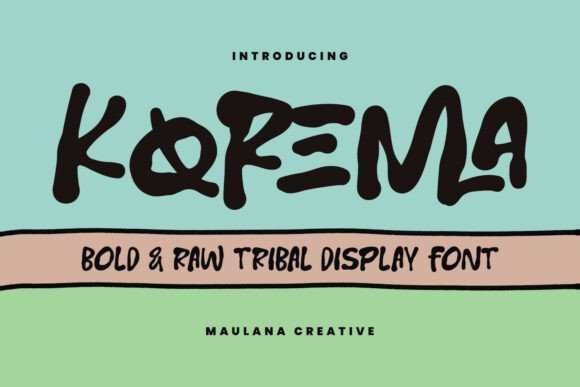
Korema: A Bold Display Font
Korema is a striking display font that blends raw, organic energy with a modern urban tribal aesthetic. As a web designer, you know the importance of choosing the right Fonts to create a strong visual identity. Korema offers a unique combination of heavy, hand-drawn strokes and experimental ligatures that make it ideal for digital projects requiring a powerful presence.
Korema for Hero Sections and Website Headers
When designing a website, the first thing users see is the header. Korema can transform your hero sections into visually compelling experiences. Its bold strokes and dynamic shape make it perfect for headlines that demand attention. Whether you're building a landing page for a creative agency or launching a new product, Korema adds a sense of urgency and energy that resonates with your audience.
For example, using Korema in a hero section for a SaaS startup can instantly communicate innovation and strength. Pairing it with a clean sans serif font for supporting text ensures readability without sacrificing style. This balance is crucial for maintaining a professional look while still standing out from the competition.
Korema for Brand Identity and Logo Design
Creating a consistent brand identity requires more than just a logo—it's about the entire visual language of your business. Korema can be an essential part of that language, especially when used in logo design. Its tribal-inspired elements add a layer of authenticity and depth that traditional fonts often lack.
Consider a boutique online store selling handmade goods. Using Korema in the logo and throughout the site reinforces the brand’s commitment to craftsmanship and uniqueness. It helps establish a tone that feels both modern and deeply rooted in tradition, which is key for building trust with customers.
Korema for Call-to-Action Buttons and Interactive Elements
Call-to-action buttons are critical for conversion-focused layouts. Korema can elevate these elements by adding a distinctive visual flair that captures user attention. However, it's important to use it strategically—overuse can lead to clutter and reduce usability.
On mobile screens, where space is limited, using Korema for CTA buttons needs careful consideration. Ensure there's enough contrast between the font color and background, and avoid using it on small buttons where legibility might suffer. Instead, use it for larger buttons or as a decorative accent around the button itself.
Korema for Social Media Graphics and Digital Ads
Social media graphics and digital ads require fonts that can stand out in a crowded space. Korema’s bold and unconventional style makes it a great choice for these platforms. Its hand-drawn nature gives a sense of personality that can differentiate your content from others.
For instance, a marketing campaign promoting a new music festival could benefit from using Korema in its social media posts. The font’s tribal aesthetic aligns well with the energetic vibe of such events, making the visuals more engaging and memorable. Just remember to test different sizes and placements to ensure the message remains clear and impactful.
Korema for Creative Portfolios and Online Stores
Creative portfolios and online stores need to showcase work in a way that feels both professional and expressive. Korema can help achieve this balance by serving as a focal point in headers, banners, and product titles. Its ability to convey emotion and energy makes it ideal for industries like fashion, art, and design.
In an online store, using Korema for product headings can draw attention to key items. However, it's best to use it sparingly—too much can overwhelm the viewer. Pairing it with a simple, readable font for product descriptions ensures that the overall layout remains easy to navigate and aesthetically pleasing.
Korema for Blog Headers and Editorial Design
Blogs and editorial content benefit from typography that guides the reader through the content. Korema can serve as an effective tool for blog headers, offering a visual anchor that sets the tone for the article. Its boldness makes it ideal for attracting readers’ attention and encouraging them to engage with the content.
However, when using Korema in editorial design, consider the context. For long-form articles, it may be better to use it only for section headings rather than the main title. This approach maintains a clean and professional look while still leveraging the font’s unique character to enhance the reading experience.
Korema for Responsive Web Design and Mobile Optimization
With the increasing number of users accessing websites on mobile devices, responsive design has become a necessity. Korema’s design allows it to adapt well to different screen sizes, but it's important to test how it looks on smaller screens. Ensure that the font remains legible and doesn't lose its impact when scaled down.
On dark backgrounds, Korema can create a striking contrast that enhances visibility. On light backgrounds, it may need to be paired with a darker color to maintain clarity. Additionally, when using Korema over images or complex backgrounds, consider adding a subtle shadow or outline to improve readability without compromising the font’s visual appeal.
Korema for Font Pairing and Typographic Harmony
Font pairing is a critical aspect of web design, and Korema offers a versatile foundation for creating harmonious typographic systems. When used alongside a simple sans serif or serif font, it can add a touch of creativity without overwhelming the layout.
For example, a coaching website might pair Korema with a clean sans serif for body copy, ensuring that the information is easy to read while still maintaining a strong visual identity. This combination works well for both desktop and mobile views, providing a balanced and professional appearance across all platforms.
Korema for Commercial Use and Licensing Considerations
Before integrating Korema into any project, it's essential to review the licensing terms. Most premium Fonts come with specific guidelines for commercial use, including restrictions on embedding in websites, using in client projects, or distributing digital templates.
As a web designer or digital product creator, understanding these terms ensures that you remain compliant and avoid potential legal issues. Always verify that the license covers the intended use case, whether it's for a personal portfolio, an online store, or a client’s brand assets. This step is crucial for maintaining professionalism and protecting your work.