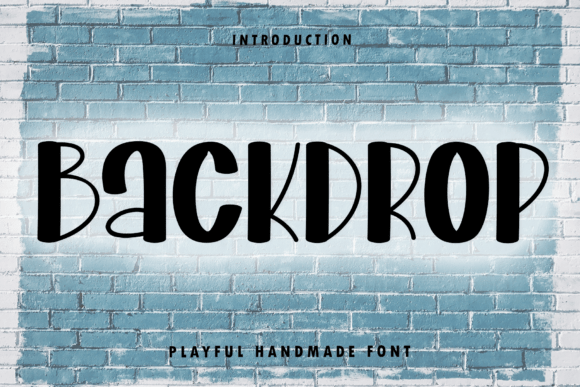
Backdrop: A Display Font for Elegant Branding
Working on a branding project for a new artisanal café, I found myself scrolling through my font library, searching for something that could capture the warmth and sophistication of their vision. That’s when I came across Backdrop. It wasn’t just another script font—it felt like a breath of fresh air, with its fluid strokes and high-contrast design that exuded modern elegance.
Backdrop is an elegant and fluid handwritten script font that captures the essence of a modern, sophisticated typeface. Its graceful, high-contrast strokes and sweeping loops give it a refined yet approachable feel. As a display font, it’s perfect for creating visual interest in brand materials where personality and style matter most.
Backdrop for Logo Design and Brand Identity
When working on a logo concept, I often start with a blank canvas, sketching out ideas and testing different fonts. Backdrop stood out immediately because of how it balanced delicacy with strength. The fine, tapering strokes added a sense of movement, while the looping forms gave it a touch of refinement that felt right for a boutique café setting.
Using Backdrop as the primary font for the logo allowed me to create a sense of authenticity and artistry. It didn’t feel too casual or too formal—it struck the perfect balance between being readable and visually engaging. I paired it with a clean sans serif for the tagline, which helped reinforce the brand’s modern aesthetic without overpowering the main text.
The font’s versatility made it easy to adapt across different brand elements. From business cards to signage, Backdrop maintained its character while fitting seamlessly into the overall design language.
Backdrop for Packaging and Product Labels
One of the first real tests for any font is how it looks on packaging. For the café’s product labels, I experimented with different sizes and placements. Backdrop worked beautifully on small tags, where its delicate details still shone through. The high-contrast strokes made it stand out against minimalist backgrounds, giving each label a unique, handcrafted feel.
On larger packaging, like coffee bags or branded containers, the font retained its elegance without becoming overwhelming. I found that using it as a headline font helped draw attention to key information, while keeping the rest of the text simple and functional.
For a handmade shop or skincare brand, Backdrop would be ideal for product names or slogans. Its flowing lines suggest care and craftsmanship, which aligns well with the values of such businesses.
Backdrop for Social Media Graphics and Web Headers
As part of the branding package, I also designed social media graphics and website headers. Backdrop proved to be a strong choice for these digital assets. On Instagram posts, it added a personal, artistic touch that felt authentic and eye-catching.
For website headers, the font’s contrast and flow made it highly legible, even at smaller sizes. It worked well as a focal point, drawing the viewer’s attention without sacrificing clarity. Pairing it with a neutral background or a soft gradient helped maintain visual balance while keeping the design cohesive.
Whether used for a hero section or a promotional banner, Backdrop brought a sense of movement and energy that other fonts might not have achieved.
Backdrop for Editorial and Print Design
Another area where Backdrop excelled was in editorial design. When creating a brochure for the café, I used it for headings and subheadings, allowing it to guide the reader through the content with a sense of rhythm and grace. The font’s natural flow made it feel more like a handwritten note than a printed document, adding a human touch to the design.
In print, Backdrop held up well on both glossy and matte finishes. Its fine details remained crisp, and the high-contrast strokes ensured readability even from a distance. This made it a great choice for posters, flyers, and event invitations.
For a creative studio or local restaurant, Backdrop could serve as a signature font for all printed materials, helping to establish a consistent and recognizable brand presence.
Testing Backdrop Before Finalizing a Brand System
Before committing to a font for a full brand system, I always recommend testing it in multiple contexts. With Backdrop, I created mockups for different applications—business cards, signage, packaging, and digital assets—to see how it performed in each scenario.
I also checked for ligatures and alternate characters, which can add subtle variations and prevent repetition in longer text. These small details can make a big difference in the overall look and feel of a design.
It’s also important to consider the font’s file formats and licensing. Backdrop likely comes in multiple weights and styles, which gives designers flexibility when building a comprehensive typography system.
Pairing Backdrop with Other Fonts
While Backdrop works well on its own, pairing it with other fonts can enhance its impact. I often use it alongside a serif or sans serif font to create contrast and balance. For example, combining it with a classic serif like Caslon or a clean sans like Helvetica adds depth and structure to the design.
For a more modern look, pairing it with a geometric sans serif or a bold display font can create a striking visual effect. The key is to maintain legibility and avoid overcrowding the design with too many competing elements.
When working with clients, I always encourage them to experiment with different pairings to find what best reflects their brand’s personality and goals.
Backdrop for Creative Projects and Commercial Use
Backdrop is not just for logos and branding—it can also be a valuable tool in commercial design projects. Whether it’s for merchandise, digital templates, or marketing assets, the font brings a level of sophistication that elevates the overall design.
For a handmade shop or boutique, using Backdrop on product tags, packaging, or promotional materials can help reinforce the brand’s identity and attract the right audience. Its elegant appearance suggests quality and care, which can resonate strongly with customers looking for unique, artisanal products.
As a designer, I appreciate how Backdrop can adapt to different styles and industries while maintaining its core appeal. It’s a font that feels both timeless and contemporary, making it a versatile choice for a wide range of creative work.